Our next monthly meeting is Saturday at 2 PM EST on Zoom.
Our next monthly meeting is Saturday at 2 PM EST on Zoom.
In honor of Juneteenth, the Prince George’s County Lynching Memorial Project will NOT be meeting this month. Look for our next meeting in July.
To encourage all to take advantage of Juneteenth events, please see the options below.
In person: City of Greenbelt activities Friday night June 18th and Saturday 19th (see flyer), co-sponsored by Greenbelt Black History and Culture Committee (co-chaired by PGC LMP members Dr. Lois Rosado and Leeann Irwin).
On-Line: Afro-American Historical and Genealogical Society-Prince George’s County, Maryland Chapter (AAHGS-PGCM) Juneteenth | AAHGS | PG County
Also:
Parks and Planning may do a virtual Juneteenth event (Check site for details: http://www.pgparks.com/780/Juneteenth)
PG County Library offers several events this month (Check site for details: https://www.pgcmls.info/juneteenth )
Please see the following statement on Racial Injustice & Social Equity from our partners at Maryland Commission on African American History and Culture and Maryland Lynching Truth and Reconciliation Commission.
A major lesson from history is that those who do not learn from the past are destined to repeat it. Financial and political power built upon systems driven by racial oppression does not make a sound foundation on which to forge and advance a humane, sustainable future for the United States, and the majority of people in this country are voicing that statement. Maryland, like the United States, has a profound and tortured relationship with systemic racism, and as a result, this state has been an epicenter for protests and calls for Black liberation: from the abolitionist movement to innovations in the arts, education, and civil rights legislation. The legacy continued in 1969 with the MCAAHC, and in 2019 with the MLTRC.
You can download the full statement here:
Part of our work as the PGCLMP is to name the truth.
This article from author Clint R. Smith III, an excerpt from his recent book, is featured in the upcoming issue of The Atlantic as part of their Inheritance series. He gives an overview of the Lost Cause myth that persists in the minds of many Americans and the ways the truth about slavery, Confederate monuments, and the Civil War are obscured.
Gramling then turned his attention to the present-day controversy about Confederate monuments—to the people who are “trying to take away our symbols.” In 2019, according to a report from the Southern Poverty Law Center, there were nearly 2,000 Confederate monuments, place names, and other symbols in public spaces across the country. A follow-up report after last summer’s racial-justice protests found that more than 160 of those symbols had been removed or renamed in 2020.
Gramling said that this was the work of “the American ISIS.” He looked delighted as the crowd murmured its affirmation. “They are nothing better than ISIS in the Middle East. They are trying to destroy history they don’t like.”
On Saturday, March 27 from 11 AM – 3 PM, there is an opportunity for volunteers to explore history and give back at a clean up day for the Tanyard/Franklin Cemetery. Please see the attached flyer for the items to bring and what to expect from this opportunity which will include history about the cemetery. Refreshments will also be provided.
See the flyer below for more details:
If you missed our recent webinar, you are in luck. You can watch it below or on our new Youtube channel.
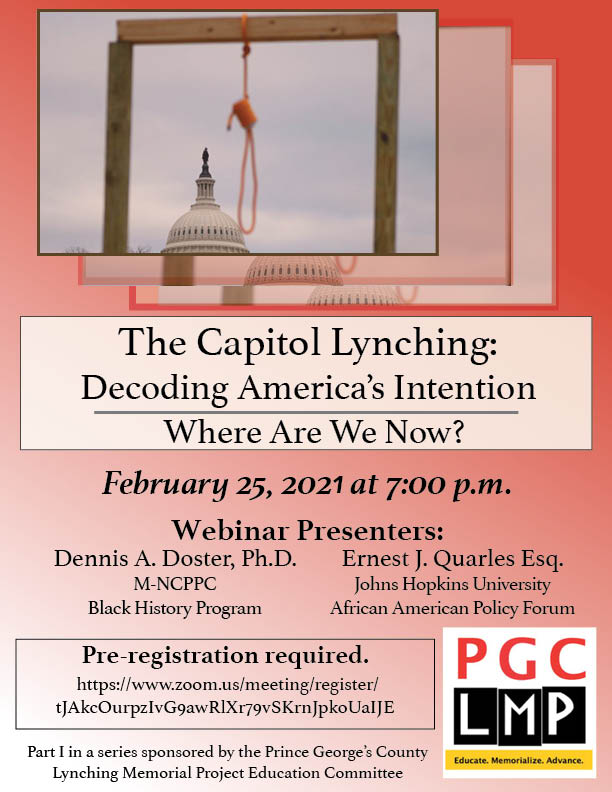
Join us Thursday, February 25 at 7 p.m. for Part I of a webinar series organized by our Education Committee.
“The Capitol Lynching: Decoding America’s Intention. Where Are We Now?” will provide a brief overview of historical lynchings in the U.S. and specifically Prince George’s County and the consequences for both Black and white communities, while taking a look at the events on Jan. 6 as they relate to the history of lynching culture and the continuing problems of race-baiting hate, disenfranchisement and exclusion. We will also examine the U.S.’s current commitment to ensuring racial equity and justice.
Attendance is free but pre-registration is required: https://www.zoom.us/…/tJAkcOurpzIvG9awRlXr79vSKrnJpkoUaIJE
Sidney Thomas writes a powerful and beautiful piece for Black History month by remembering the name and story of William Burns, the only black man lynched in Allegancy County in western Maryland. The article offers us a glimpse of a soil collection ceremony, a project we are working to do in the Piscataway, Maryland area. Please read as we share stories throughout this month:
The soil was collected by Ms. Fisher and other local volunteers at the Allegany County courthouse site on Washington Street where Williams Burns, an African-American man, was brutally lynched on October 6, 1907 by an all white mob – some of whom were members of the Ku Klux Klan. The soil was collected as part of the Equal Justice Initiative Community Remembrance Project – in association with the Allegany County Lynching Truth and Reconciliation Committee. EJI is a nationwide organization working to confront prejudice and heal our nation’s history of racial injustice.
CW: Brief description of a historical lynching
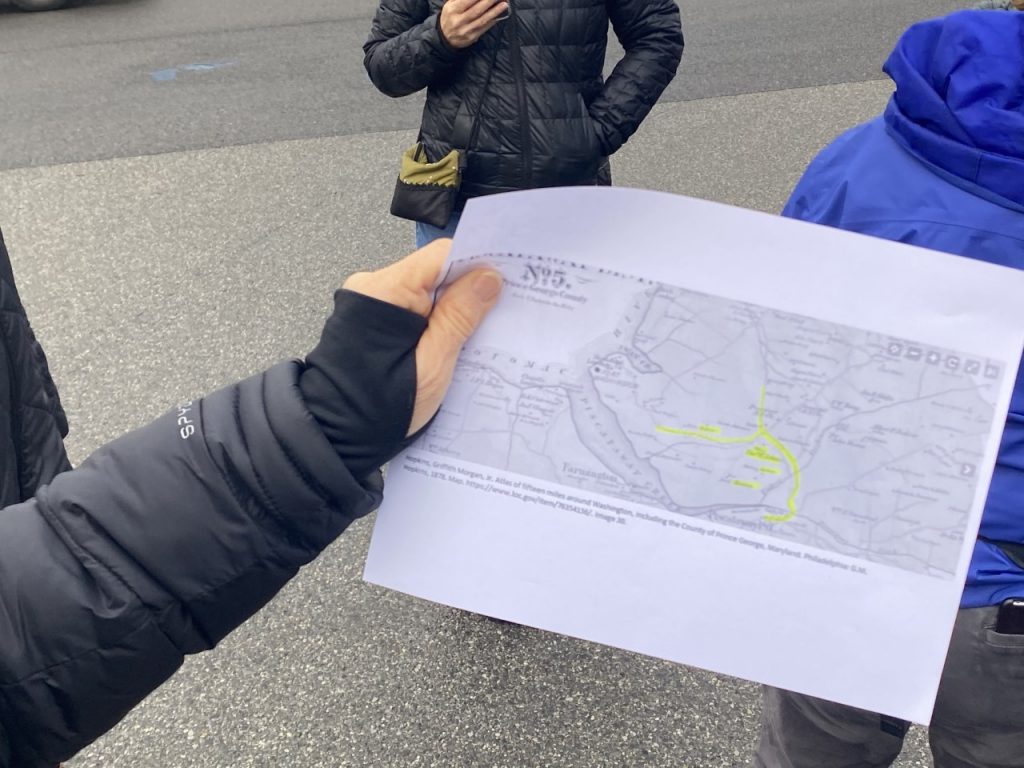
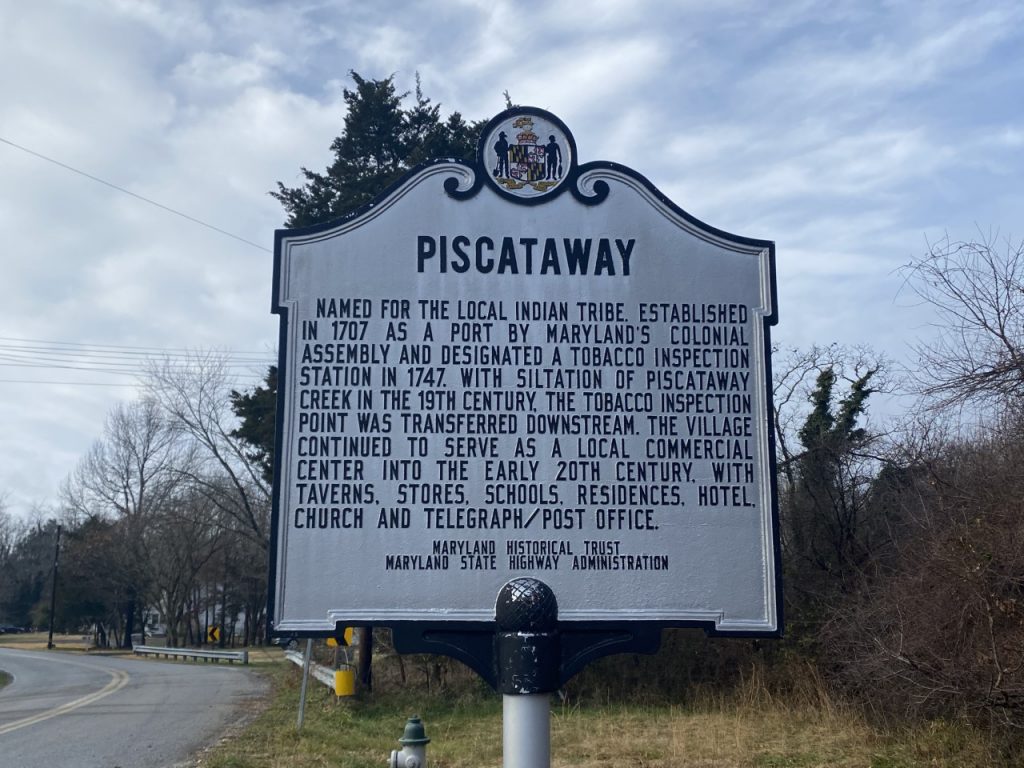
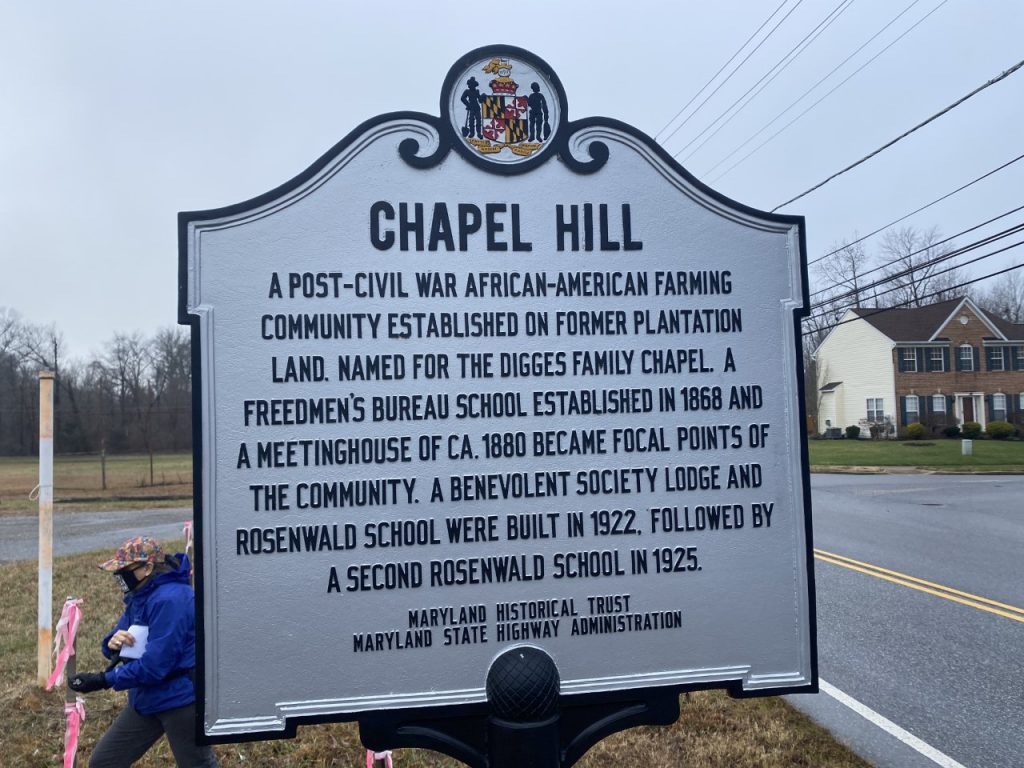
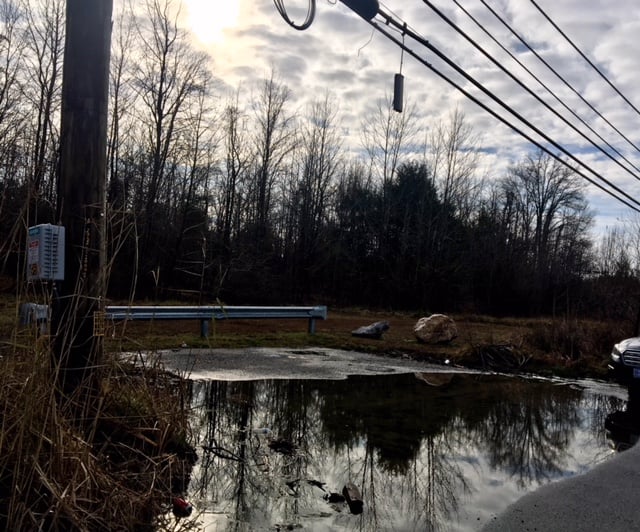
The 1869 lynching of Thomas Juricks became more tangible for members of the PG County Lynching Memorial Project during a January tour of four Piscataway sites connected to this horrific chapter of the county’s history.
A mob wearing handkerchiefs with eyeholes cut out lynched Juricks, who was awaiting trial after being accused on flimsy evidence of raping a white woman. He worked on a farm in Piscataway and lived nearby with his family.
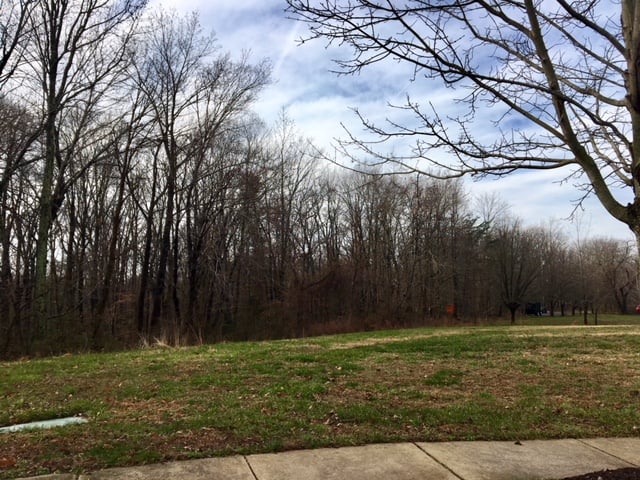
During the tour led by PGCLMP member Blair Bowie, we learned more about what is believed to be the county’s first lynching, identified possible locations for a soil collection community remembrance project, considered ways to involve the local communities (Clinton and Fort Washington) and discussed areas for further research.
The tour included:
Members of the PGCLMP were joined by representatives of The Accokeek Foundation and other interested county residents.
Photos by Karen Scrivo and Aaron Tinch
2020 was a year no one saw coming. Everyone has had their own struggles as well as joys, but the end of the year is also a time to reflect on what we’ve accomplished together!
If you have anything to add to our list of accomplishments, post them in the comments below. Here’s to a new year and the new things to come for PGCLMP in 2021.